Tuesday, June 18, 2013

Korea's Got the Squats

Traditionally, Koreans are professional squatters. A squat is a very comfortable position for many Koreans, and the further you get from the downtown of a major city, the more often you can see it.


These guys, above, are having a smoke break on a hot summer day.


How to Squat:

1) Stand straight, feet should be shoulder length apart.

2) Keep your back as straight as you can and go straight down until your butt is resting on the heals of your feet.

3) Keep your feet flat to the ground.

4) You must be able to comfortably maintain this position for 10-15 minutes.


A little girl imitates her mother's squatting.

Why do Korean people squat?

Well, I suspect it's a combination of many reasons. Korea is traditionally a floor oriented society, so squatting is a useful skill for sitting outside without getting yourself dirty.

I have one guess as to the biggest reason why  Koreans can squat so well to this day.


 It is not uncommon to see these dominating public restrooms across Korea.


And especially if you're a woman... wouldn't squatting be a useful skill?

Tuesday, June 4, 2013

Laws & Looking the Other Way

This post is really about Korean Police Officers more than anything else. The laws have a lot to do with how the police function in Korea.


1. Laws That Aren't Laws

Like every country, Korea has paper laws that just aren't enforced much. I won't go into these extensively, but I chose a set that are culturally unique.

A) Buying/Selling pirated DVDs is illegal in Korea... yet if you walk around in the most popular areas of Korea, you'll find DVD sellers that look like this!
 

In fact, ironically, if you WANT to find these sellers, you NEED to think about where the most popular places are and go there! They can be found along the main strip in Gangnam, which you know from Psy's song, or along the main strip in Jongno, which is the old central district of Korea where most of the capital's palaces are located, or in Myeongdong, which is the most famous shopping district in all of Korea.

If the police want to bust these people and shut them down, all they literally need to do is take a walk down the sidewalk of any one of the most popular streets in Korea. It really wouldn't take much effort at all.

B) Driving Motorcycles: With oversized loads - on the crosswalks - on the sidewalks - against traffic - is illegal. I snapped these pictures myself. Seeing this stuff is very common. One friend of mine jokingly noted: "Motorcyclers in Korea are like homeless men on a motorbike." This law is almost never enforced, and it's not like these guys are hiding or being sneaky about it. These are broad daylight traffic violations.


C) Peddling Goods in the Subway is Illegal. Sometimes you'll get on the subway in Korea and will be riding it, and then at some point a man or woman will get on with a little cart and try selling stuff to the passengers. 


The come around with a little cart and sell very cheap items. Here are some things I've seen whilst on the subway: gloves, mini LED light, socks, shoe cushions, pipe cleaner, CDs.

One English teacher mentioned that sometimes the subway workers shew the peddlers away, so the peddlers just stop speaking and stand aside, then when the workers leave they start it all over again.


2. Aftershock of Rapid Modernization
The 3 mentioned laws that are not strongly enforced in Korea have one major thing in common. They are all laws commonly broken by the poor.


Korea's economy has grown so large, so quickly, people were just left in the dust. There's no avoiding it. It's amazing to consider that Samsung is one of the world's leading manufacturers  distributors, and innovators of some very popular technologies. While most Koreans have high speed internet, today, older generations can still remember living among trash and rubble from the war, scraping to get a bowl of rice.

Police officers don't WANT to enforce those laws on the poor. To do so would be a form of oppression. They feel so sorry for those poor Korean people because it's the way they need to make money and earn a living... so they let it go.

3. Police Law Enforcement

My experiences with foreigners have led me to conlcude that there is a dominant feeling of disrespect and disregard for a Korean police officer's job.

"They're glorified security guards," says one person.

In fact, their uniforms do actually resemble those of security guards in USA...


Nevertheless, they are capable. As all Korean men are required to do 2 years of service in the military, many young Korean men are doing their service in the law enforcement.

This also means that, while guns are illegal in South Korea, all Korean Police Officers are trained soldiers of the Korean armed forces.


Here's a recent example of an incident which happened where an American GI went rampant committing dumb crimes and a Korean police officer ended up pulling a gun and shooting him, hitting him in the shoulder.

They are capable. 


Korean Police Officers generally 
follow these guidelines: 

If you have done something that is obviously disrupting people around you (selling things or parking your car in the wrong place), they will step in.

If they receive complaints from people about what you're doing, they will act on it. I know somebody who parks his car in the same place every day, illegally. Every day, the police walk past. One day, we were talking to the police about the car, asking questions, and they asked if we were complaining and wanted that car to get a ticket. We said no! So they nodded and kept walking.

If the people don't care about the laws being broken... the police don't care either (as long as it's not a danger or obstruction, of course).

And finally, it's worth mentioning... 
Even Korean cops like donuts.


Sunday, May 26, 2013

Korean Picnic - foods & style

In Korea, it's traditional to first have a picnic mat  It's not a blanket, it's an actual mat  thick and flexible enough to be rolled up or folded, but not really cloth. I'll add a better picture, soon, but here's what they can look like.


And as a side note - yes, this is a 7-Eleven convenience store in Korea. They are very common.

In Seoul - one of the few worthwhile places to picnic is at one of the many great park locations along the Han River. Here are some people picnicking there.


People also like to bring tents to protect against the bugs and sun while still getting the nice air and view.

In USA, when you mention picnic food I think about sandwiches and coleslaw, fruit, chips... these are pretty standard types.

One of the primary Korean picnic foods is Kimbab ("Kim-bop"). In USA, we know of this food as something like a California Roll - American "Sushi" without the fish (although tuna is popular inside). It's a seaweed wrapping with rice and veggies in the middle. Another food you can sometimes see is dduk, which looks like a giant noodle which is made from rice, so it has a texture similar to licorice - and a whole bunch of foods similar to these - and variations of these.

I went on a picnic with elementary school kids, one time, and here are some lunches their moms packed them. Almost 200 kids, and these lunches represent 90% of them or more.


Here you have kimbab. Outside is egg, then seaweed, then rice, and in the middle they rolled up a bunch of stuff. It looks like carrot, ham, radish, green leaves, some fish, and tofu. I'm not sure, though. Then you have quail eggs, hard boiled and peeled. 


This mom got very creative and shaped hers like angry birds. It looks like she made "nude kimbab" - which is kimbab but without the seaweed holding it together. The other thing she made is called "yooboo-cho-bab". I've never eaten that, but the outside wrap is a soybean curd which is similar to tofu. You can see it's got just a rice mixture of a bunch of good stuff inside


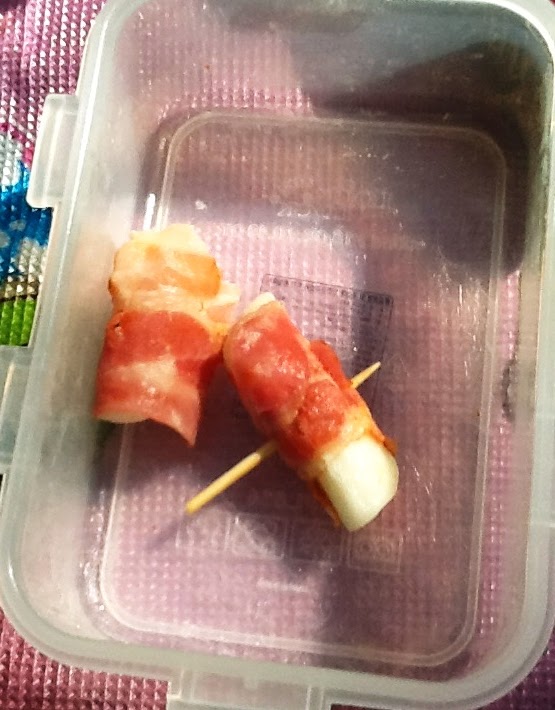
You're looking at Korean dduk wrapped in bacon!!! FANTASTIC.


This mom made some special things. The one with the leaves is something I've seen in restaurants, but it is not a common food. She made her own variation. Looks great.


Picnic foods we have in common are fruit, beer, chicken, and BBQ. Korean people love Korean style BBQ, which is a little different, but both taste awesome to me.


Sunday, May 19, 2013

Driving In Korea - updated 5/26/2013

Looking for Info?
 Come here looking for info? Here's pretty much all the info you'll need! This info is up-to-date as of May 26th, 2013. Enjoy the Links:

1. Korea4Expats - Driver's License page
My favorite website for info on Korea. Absolutely fantastic and extensive.
2 Korea's Driver's License Authority
Korea's website with info on testing locations and requirements - in English. 
3. FREE Driver's Classes for Foreigners (Blog Post)
A fellow blogger from Korea posted info on free driver's classes for foreigners. Also, I recommend checking out her blog, which showcases a different style but is similarly interesting.

Scooter? Motorcycle? Nope.


 At the beginning of 2013, when it was settled that I'd be living further from my work, I decided to buy my own transportation. Originally, I decided on a scooter or motorcycle, but thanks to a friend, a great opportunity to buy a car landed on my lap. I took it. 

My friend told me that he knows many very experienced riders of scooters and motorcycles, and that all of them have been involved in accidents in Seoul. In addition to my having never driven a motorcycle or scooter, and Seoul not being the greatest place to learn, he noted I wouldn't be able to drive in the rain or snow, which is at LEAST a third of the days in the year.


One of my coworkers also told me about quite a few accidents he has been in.


An American Getting a Korean Driver's License

I've been driving for 15 years, since I was a sophomore in high school. As the youngest in my family, I always had an old car to drive and I took advantage of that. Sometimes the cars were automatic, and sometimes they were manual. I loved shifting, grew up 45 minutes outside of Chicago, and drove there in all variations of weather. In fact, I won't bother listing my long resume of driving experiences. They are extensive.

I have a valid Illinois Driver's License that won't expire for many years... but to drive in Korea, another license is required. An International Driver's License, which is valid for only 1 year, can only be obtained outside of Korea, so that wasn't an option.


If you are Canadian, you can go to the Korean Driver's License Examination Office and give them your license, take a written test, and they will just give you the Korean License. When you leave Korea, you have to go back there and give them your Korean License to get your old one back.

Sadly, for Americans, it can be different! And worse yet, it's different depending on which state you're from! At the time of writing this blog post, Americans from the following states don't have to take a written test and can just trade their licenses for a Korean one: Alabama, Florida, Iowa, Maryland, Massachusetts, Michigan, Texas, Virginia, Washington, D.C., and West Virginia.


As you can see, I'm one of the UNluckys! And as of January 2013, Korea demands that I get an Apostille to show that my driver's license is real and not a fake!

Many Americans have never needed to learn what an Apostille is, but may be familiar with a notary. An Apostille is like a notary, but is an official golden stamp from the government of a state or country.

Basically, I had two choices:

1. Send my license and info to the Illinois State government office and wait several weeks for all of it to go through, costing lots of time and a bit of money.

2. Get my Korean Driver's License the same way any Korean person would, by taking the written test, taking the driving course test, and then taking the open road driving test.


To save time and money, I chose option 2 since I had a couple weeks of vacation.

Step 1) Written Exam

The written driver's exam is taken on a computer. You're asked maybe 40 or so questions, and you have to choose the best answer(s). You can buy a DVD to study for the exam, if you want. I didn't. Maybe I was too proud of my driving experience.

The actual exam wasn't difficult, and I passed my first time (by the skin of my teeth) - but the rumors proved true. The hardest part of the written exam was understanding what the question was trying to ask you. The questions were not in native English format, and they were very hard to understand! I read a lot of the questions many, many times before answering.

Step 2) The Driving Course


The driving course frustrated me, a bit... mostly because I didn't do enough research before trying it. I failed the first time. Here's what happened:

I walked down a hill to the driving course which was a large oval road with 8 cars on it facing counter clockwise, 4 on each side of the straight. One side was for manual tests, the other for automatic.

It was my turn, and the guy told me to get in. I followed basic procedure of adjusting seat and mirrors, and starting the car. There was a computer on the dashboard in the center of the car with English instructions on what I should be doing. The computer told me to drive in a straight line and not to exceed 20kph. I did that. Suddenly, the car's computer started yelling at me and telling me "Danger! Danger!" I was shocked, and I stopped the car, then idled forward a little bit, trying to figure out if I had already blown the test.

It turned out that they were trying to simulate a situation where I needed to stop immediately and put on my hazard lights. After that, the test was basically over... but since I didn't do that, they failed me.

It was literally a simple 5 minute test, and I failed, so I had to sign up for a new test in a couple days. Frustrating!


When I went inside, I talked to the lady and asked how I could study for this exam... and she pointed to the back, where they had driving simulators! The simulators were EXACTLY the same as the course test I had just taken! So when the Korean students get into the real car for the test, there are zero surprises for them. (Even more frustrating to me...)


You can see the simulators in the background, here.

Step 3) On-Road Driving Exam


The on-road driving exam also isn't hard if you're an experienced driver, and it's pretty high tech. The instructor sits next to you in the passenger seat, and a sophisticated computer system monitors how you handle the car. Whatever the computer can't monitor, the instructor notices.


There are about 4 possible local driving courses which take an average of 20 minutes to complete. When you get in the car, the instructor pushes a button and the computer randomly selects your course, then the test begins. If you pass, you can get your license the same day.

Buying a Car

So my friend put me in touch with somebody, and I ended up buying a car. Luckily, I bought it from someone very trustworthy who I was connected with through my church. This car was bought from a used car dealer in Korea for about 1.4 million won (a little less than $1,400), and I bought it from him for about 1.0 million won (a little less than $1,000).

It's a 1997 Hyundai Accent. It is OLD, but only had 117,000km on it and runs well. I named him Brownie. He's in pretty good condition, and has quite a weak engine (1.5L, 4 Cyl, 5-gear manual).


Before buying it, I talked with my Korean girlfriend. She has never really driven a car apart from getting her license, so we come from extremely different backgrounds. She began by giving me a list of warnings about buying a car this old, and went so far as to tell me that I need to consider buying a Black Box for it!

As an American, I was blown a way by this. "A Black Box?!" I asked. You mean the kind they have on airplanes in case of a crash?! Indeed, that's the kind. Apparently, all new cars in Korea have them (elsewhere, I dunno!).

In Korea, you don't have to keep renewing your license plate. My license plate is the same as the one that came with the car when I bought it!

But you MUST have insurance for the vehicle before you register it. Here is my insurance company, which I highly recommend. It's definitely the cheapest, and I was able to add my house-mate to the insurance for no additional cost, since he can drive manual. Mine cost about 650,000won (roughly $650) for the year, and it was only that expensive because it is my first year driving in Korea. After the first year, I'm told it will go down to nearly half that cost.


Injury SCANDALS: Black Box Explanation

When I bought the car, the previous owner warned me and told a story about the driving scandals that happen here. Basically, because insurance is required, I was told that pedestrians will jump at your car and fake an injury. He said this has happened when outside of Seoul at one of the rest stops (Korean Rest Area = 휴게소; "hyoo-gay-so").


Later, my girlfriend confirmed this scandal, which she said is a new kind of crime in Korea. She then informed me that this is why black boxes have become more popular and affordable in Korea, because the camera catches these crimes and the driver has evidence.


Seoul Driving: Scary? Crazy? Dangerous?

My style of driving is quite aggressive because driving in and out of Chicago has trained me to be this way. In Korea, I feel the freedom to drive this way. First, because my car is old, so if another car bumps me, it certainly won't be the end of the world if my car gets a scratch. Second, there are so many aggressive taxis on the road, here.

I would like to tell foreigners who drive in Korea not to be afraid. It's really not that bad - but you need to approach this adventure with the right mind.


Here are rules that I think are good to follow:

1) Follow Korean Examples -
If you see a taxi do something, just remember they make a living from driving around the city, so they probably have done it many times. It's pretty safe to assume you can imitate their actions.


2) Don't Turn Left on a Green Light - In Korea, at least in Seoul, you'll always have a green arrow. Wait for it. You can't turn left on a green light.

3) Go the speed of Traffic - Same rule in Chicago. If everyone around you is speeding, speed. It can be more dangerous going too slow and having everyone honk and get angry and try to pass you.

4) Don't Drive in the Far Right Lane - Don't drive in the far right lane unless you're going to be very alert to cars pulling over and stopping. Especially, taxis do this often.

5) Use Your Hazard Lights - Drivers in Korea are taught that if you have to slow down or stop, suddenly, your first and immediate reaction should be to punch on your hazard lights. Do it. Korean drivers are very responsive to this. If you need to pull over or turn around or slow down in an abnormal place, flip them on.

6) Parking - It's pretty much okay to park anywhere you want. ALWAYS have your phone number on the inside front windshield of your car so people can call you if there's a problem. Korean police give tickets if they feel your parking is a problem, or if they get complaints. But otherwise, you're fine. General rules are: Don't block roads and other important things.7) Stay in your lane? SORT of - I will say, "STAY IN YOUR LANE" - but I will EMPHASIZE that my use of the word "LANE" is strictly defined by the cars that are in front of you and behind you! It is NOT defined by the white lines. 

I could go on and on about this... but I've come to notice a few things. 


Here are some 
Observations I've Made:

1) Lanes Don't Align - The reason I said in #7 above that I define a "lane" as the line of cars in front of you and behind you is because I have driven through TOO many intersections in seoul where you're driving nicely in a lane, and you cross an intersection, then suddenly you find yourself between two lanes. They simply don't line-up from one side of the intersection to the other! Sometimes, one of the lanes just disappears! SO... basically, just do your best. Follow the car in front of you.

2) Drivers Run Red Lights - Cars often treat red lights as stop signs. A car will stop, then slowly idle through the light, and keep on their way. They do this when they know there are no traffic cameras, police, or pedestrians.

3) Motorcycle MAYHEM - 
Motorcycles are not treated as cars, in Korea. They are basically like vigilante vehicles that weave in and out of and between cars. They'll drive on the lane dividers. They'll drive against traffic. They'll drive on the sidewalks. They'll drive on the crosswalks. They'll basically do whatever they want. You must beware of them and drive cautiously around them. Use your blinker... and check before opening your doors!

4) Climbing Lane - I recently took a car trip to the east coast of Korea. My old car went up and down hills. While going up, something called a "climbing lane" would appear. Now, I'm from FLAT Illinois, in USA, so I had no idea about these... but I learned very quickly. This lane is for cars, like mine, that don't have the engine power to climb the hill fast. So you should jump in this lane.


5) Jagged White Lane Lines - Several times, I have been driving, and suddenly the white lane lines turned into zigzags, like teeth. I guessed it means I should slow down and be careful... and that's right. It means you're passing a popular pedestrian crossing area. It looks something like this picture.

2) Korean Cops - There aren't very many police cars driving around, and I have never see anyone get pulled over for speeding. Don't expect to run into any trouble with the local law enforcement. Road rules are mostly regulated with cameras, it seems... although cops DO give a lot of parking tickets!

That's about it for observations. Other than that, there isn't much else for American drivers to beware of. The rules of the road are pretty much the same.

I've been having LOTS of fun driving in Korea. It's just like driving in any major city, and perhaps safer than others, in my experience. I'm getting to feel more comfortable with every passing day, like the streets of Seoul are my home streets.

Monday, May 13, 2013

Korean Education - Mysteries Revealed

If you're from a non-Asian country, you might have met a Korean student, or ethnic Korean, who studies very hard... much harder than the average person. Where I'm from, we have that stereotype of Korean students, and I have always just ignored it and recognized that they have some secret motivation that I just don't share.


Well, that's partially true.


Education in Korea is a monster topic that I will only begin touching on. My goal is not necessarily to cover it, extensively, but just to offer some unique insights and content which you might not be able to find elsewhere.

>>Story 1: Friends or not?!

In 2008, I arrived in Korea for the second time and reconnected with some old friends. I called one friend up, very excited to see them again, but there was one problem: she was busy studying for an exam.

My friend wanted to be a teacher, in Korea. In order to accomplish that goal, she must pass an extremely extensive Teachers Exam which consists of multiple tests, and which is conducted only once a year. If the person does not pass a part of the test, they must wait a year to retake the exam.
This friend of mine told me she couldn't meet me because she was always busy studying hard for the exam.

Okay, I get it! It's a tough exam. So I asked about the exam date and was shocked to learn that it was just more than 2.5 months away. TWO and a HALF MONTHS away!

It's funny, because Korean people read this and understand her a bit more. But westerners read this and can empathize with my feelings more. WHY can't she meet me if the exam is THAT far away?! To me, that was CRAZY.

But I kept trying. I told my friend: "Okay... how about this: I will come near your home or near where you're studying. I'll have lunch with you, maybe just an hour, and then I'll be on my way."


Her answer: "Sorry. I can't."

Now for me, that was a huge blow. I felt like this person didn't want to be friends (which wasn't the case), but either way, I also decided I didn't want to be friends with someone who would treat a friend that strictly.

We haven't talked since.


>>Story 2: Which does she love more? Me or Studying?


One summer while I was in Korea, my Korean girlfriend decided to take the TOEIC test. That's an official English assessment test in Korea. It's really not a good measurement of a person's English ability, but myself and some Korean people I've talked to agree that it measures other things that Korean employers are interested in, so the 'not-a-good-measurement-of-English-ability' part doesn't matter much.

My girlfriend signed up for a well reputed Academy which helps students study before taking the TOEIC. For a full month, she was waking up in the early morning, ideally around 6:30am. She'd eat, and go - then study - then take her class for about 6 hours - then study independently until it was time to meet her study group. Somewhere around 9-10pm she would head home to eat some small dinner and sleep so she could repeat the process the next day.

Sounds insane, right? It was. And it sounds insane BEFORE mentioning the glossed-over, neglected detail: SHE'S MY GIRLFRIEND. So when can we see each other?!

The short answer to that is: Well, we really couldn't. We met regularly at a cafe and sat across from eachother as she studied independantly.

Truthfully, that time was very hard for me. It almost ruined our relationship, but it didn't. And I walked away from that having learned a very important lesson about how important studying and pursuing a future career is to a Korean person.


>>Story 3: Vacation?! NOOO! 
MORE SCHOOL PLEASE!!!

One of the early shockers that I had when I started teaching kids in Korea came when talking about after school hobbies and extended periods of vacation. To put it mildly, the kids were not excited.

I remember asking one little girl, "What do you like to do after school?" And she would say, "I don't have time to do anything. I have too much homework."

Starting in elementary school (sometimes, not often, starting earlier), kids go to school from 8:30 - 2:30. After school, perhaps 2-3 days a week, they go to an English academy from 3 - 6pm. Then they go home, eat dinner, and have several hours of homework to do from school and academy combined. If they finish early, there might be time for a TV show. Generally they go to bed between 10pm and midnight.

A friend of mine who teaches at an elementary school sent me this picture of a card one of her kids made for her. It examplifies the sentiment rather well.


This card came before the winter vacation. I don't get 100% of it, but I'll tell you what I do understand. At the top left they have the "not study" president. So this student wanted a president who would be against so much studying. In the lower right, they are in jail. The student told my friend that, during the winter break, his mom would put him in his room, give him something to eat, say "study", and close the door. He would be trapped in the room. He called it "Study Jail".

This student also cleverly used the "T" in "vacation" as the cross of their gravestone, saying he studied so hard that he died. He preferred school over vacation because he said, in school, he has time to play.


>>Scandal and Tragedy

This push for education is really a result of hardworking Koreans. The Koreans that started this push did it because of the hard times this nation was going through in the past. They did it for a better future, and not just to survive, but to pull ahead. Korea has certainly done that. The results are that this system still exists, today. Whether that is a good thing or not, at this time, is debated.

Korea has one of the highest suicide rates in the world. Over the past decade, it has more than doubled. Sadly, many young Koreans who are being pressured by exams and studying are choosing, rather than facing the situation, to end their lives.

Parents in Korea can also get VERY nutty about studying, exams, and results. RESULTS RESULTS RESULTS... can sometimes be all that matters.

Very recently (3 days prior to writing this) there was an article in the Wall Street Journal about an SAT scandal. Apparently, the the US-based administrator of the SAT completely cancelled the test nationwide, in all of Korea. They discovered a scandal ring, that Korean academies were obtaining an actual copy of leaked SAT questions and that some students were studying or practicing the answers before the exam. Parents with enough money were emptying their wallets so their kids could get a high SAT score and have a better shot at getting into a good University in USA.


As a result, students who legitimately studied are paying the price. Meanwhile, the parents of some students are flying them to other neighboring countries such as Japan or China (Hong Kong) to take the SAT there, instead.  


>>Korean Education - Mysteries Revealed

This is an explanation from a Korean person which explains the mindset behind these things which run so counter to the culture I'm from. I consider this piece a beautiful treasure of insight, and so have left it untouched. Here it is, word for word:

Korea is a country that has a lack of natural resources. We believed that Strengthening human resources is the only way that we can be competitive in the global marketplace, as a result, we now have extremely high passion for education, and unique, unheard-of history and culture of education. Since we dreamt of the highest quality of education by modeling our education system after American high class' exclusive one, our educational culture resembles theirs in many ways. Children are supposed to receive a lot of, a variety of private education outside of their normal schooling. Their lives are shaped by a plan that their parents made for them. People who grew up in the middle of that standard start to doubt what they really want in their own lives after they become adults. They feel something is missing, a strong impulse to find out what they really want. The problem is that they are already at the age where they are responsible for their own lives. In addition, it is regarded to be wiser to keep their current life than to dream about something new. In some American movies, we see teenagers from rich families rebelling against their parents and trying to get out of their parents' control. It is okay for them but not for us because they have privileged parents that they can always go back to and be supported by. We, on the other hand, have only ourselves to rely on. When we go back to reality, the only people who are waiting for us is confused ourselves. I attribute this to our past that pushed us towards attaining the rich man's style of education even though we are not rich. This is our excuse for not chasing our dreams to the end.

To expand on what she's saying, other countries can compete in the global economy by offering goods and products based on resources from the land. Korea is a small nation, so it was built up on the notion that they don't have that option. They must excel in other areas. Today, Korea is well known for electronics and technology. Korea is one of the few nations who makes cars. Samsung is one of the largest producers of smart phones in a very short time. Korea has two of the world's youngest leading technology schools (KAIST and POSTECH). And they're getting better at making all these things. Korea produces a lot of the computer animations shown in animated movies. Companies in USA outsource the animation work to Korean companies.

All of this is a result of Korea pushing the "human resource", as if to say, "We don't have land resources, but we have people in numbers."

Regarding the Korean education system, I'll make a separate post on this in the coming months. They are trying to mimic Ivy League schools from USA, but from what I can see, it's only what they see as being true about Ivy League schools, and they don't carry the same ideals.

Tuesday, May 7, 2013

Americans and Korean Patriotism, Flag, Anthem

I am American. 

As I travel abroad and meet people from nations all over the world,  do you know what those people generally think about us? Recently I've heard:

1) Americans are intense.
2) Americans are opinionated
3) Americans push their way as the best way (arrogant)

So often, when my home country does something, people or government, I get questions about "why" that I don't know the answer to. "Why do Americans do this?" and "Why does the government do that?" So naturally, my default answer is, "Because America is the best country in the world!"

Don't worry. I'm being completely satirical when I say this. It's a joke, a way of poking fun at myself, my people, my country.


But do you know what? I actually want to say that Americans and Koreans have quite a lot in common, in this regard. Only Korean people are less outspoken about it and since the national language is not English, a lot less of what they do say actually gets translated for the rest of the international community to learn about.

Korean people are very proud of their history, country, and  ancestors. They are also opinionated, passionate, and think their way is the best.  Korean people are perhaps the most patriotic people I have ever met, and it is reflected in their government, culture, flag, and anthem. As one line in the chorus of the national anthem goes, 

"Great Korean people, To the Great Korean way stay always true!"

I have met many foreigners in Korea who have expressed surprise at the amount of patriotism among Koreans, but the roots of the patriotism are deeply embedded in so many aspects of life, here, and that fact has been a great contribution to their strength and resilience as a people for so long. I'd like to add that this patriotism and nationalism are still being very strongly pressed into their children, today.

The Korean Flag


Korea is well known for its isolationism. The Korean people were not welcoming to new foreign peoples, and have been slow to change in that respect.

Despite being an ancient people, they had little interest in creating a flag prior to the late 19th century. The Korean flag was first officially adopted in 1883, and then dissolved under Japanese occupation, but re-adopted near the end of Japanese rule.

The Korean flag is known as "Taegeukgi" ("Dae-gook-ghee"), and it represents long standing Korean ideals and philosophy.

The white symbolizes light and purity, and represents the Korean affinity for peace.


The circle in the center that is divided equally into a blue portion below and a red portion above represents two cosmic forces, equal and opposite. It symbolizes universal harmony in which the passive and active, the masculine and feminine, form the whole.


The black lines, trigrams, surround the circle, and represent several things each. 


UPPER LEFT is "Geon" (gun). It represents these things: sky, spring, east, humanity, father, and heaven. It means justice.


UPPER RIGHT is "gam" (gomm rhymes with "mom"). It represents: moon, winter, north, intelligence, son, and water. It means wisdom.


LOWER RIGHT is "gon" (gon rhymes with "tone"). It represents: earth of nature, summer, west, courtesy, earth the element, and mother. It means vitality.


LOWER LEFT is "ri" (Lee). It represents: sun, autumn, south, justice, daughter, and fire. It means fruition.


Now, imagine that the center circle is spinning, as though passing through the four phases. Altogether, the flag represents universal harmony and the ideals of the Korean people.

The Korean Anthem

I actually love the Korean national anthem. It is such a beautiful song. Unfortunately, I searched YouTube for a video that shows how beautiful it is, and I really couldn't find one good enough. But of the ones I saw, below is the one I liked best.

The title of the Korean national anthem is "Aegukga" (Aa-gook-gah). It means "The Patriotic Song".


Here are the lyrics in English:

Until that day when
Mt. Baekdu’s worn away
and the East Sea’s waters run dry,
God protect and preserve our country!
Chorus:
Roses of Sharon and Three thousand Li
of splendid rivers and mountains full;
Great Korean people, To the Great Korean way
stay always true!
As the pine atop Namsan Peak stands firm,
unchanged through wind and frost,
as if wrapped in armour,
so shall our resilient spirit.
The Autumn skies are void and vast,
high and cloudless;
the bright moon is our heart,
undivided and true.
With this spirit and this mind,
let us give all loyalty,
in suffering or in joy,
to the country’s love.

http://www.nationalanthems.me/south-korea-aegukga/

Sunday, May 5, 2013

What IS Korea? & Why It's Loved

Korea IS her people: The Koreans.


I want to tell you what I love about Korea the most. There are many reasons to love Korea. What I love most is the Korean people. Since arriving here, I have been impressed by them.

They are strong. They are resilient. They are passionate, proud, and opinionated. They work hard and they don't give up. They are determined, and storied. Their story is that of an underdog rising from oppression, poverty, and division. And even through past and present divisions of ideals that exist internally amongst themselves, there is something that unifies all Korean people. 


It's represented in their language, and culture. It's represented deeply in their philosophy, and in their flag. 


Before coming to Korea, I knew virtually nothing of their story or how distinct they are. Since then, I've learned quite a bit about both.


*In a single generation, the Korean people "emerged from wide-spread illiteracy to universal education, and from a quagmire of near starvation and epidemic diseases into the upper tier of modernized society."

From A History of the Korean People in Modern Times 1800 to the Present, By Robert T. Oliver

Although, this quote highlights the success while ignoring the cost,  it's a beautiful, heartbreaking Cinderella story. In some respects, it's told through the lives of every Korean - but there's more truth in saying that the story is only told through this nation of people as a whole.


The unofficial Korean shout of encouragement is literally:
"Fighting!!!"


Today, Korean men all serve mandatory 2 years in the military at some time during their college-age years. Korean women study extremely hard and seek advantages in a largely male-dominated society.

I can sense the strength of the people, here. When you meet Korean people in USA, you might notice they work very hard (much harder than the average American, I would say). Well, when you get to Korea... they all seem to work very hard. 


(Side Note: This is something that causes problems with foreigners, because they expect us to work as they do sometimes, but it doesn't happen! But that's another blog post altogether).

For this post, I wanted to use pictures that represent the strength of the Korean people that I see. I believe all of the images on this blog post, together, reflect it well. 


Korea inspires me.
The strength of the Korean people...
This is what I love most about Korea.